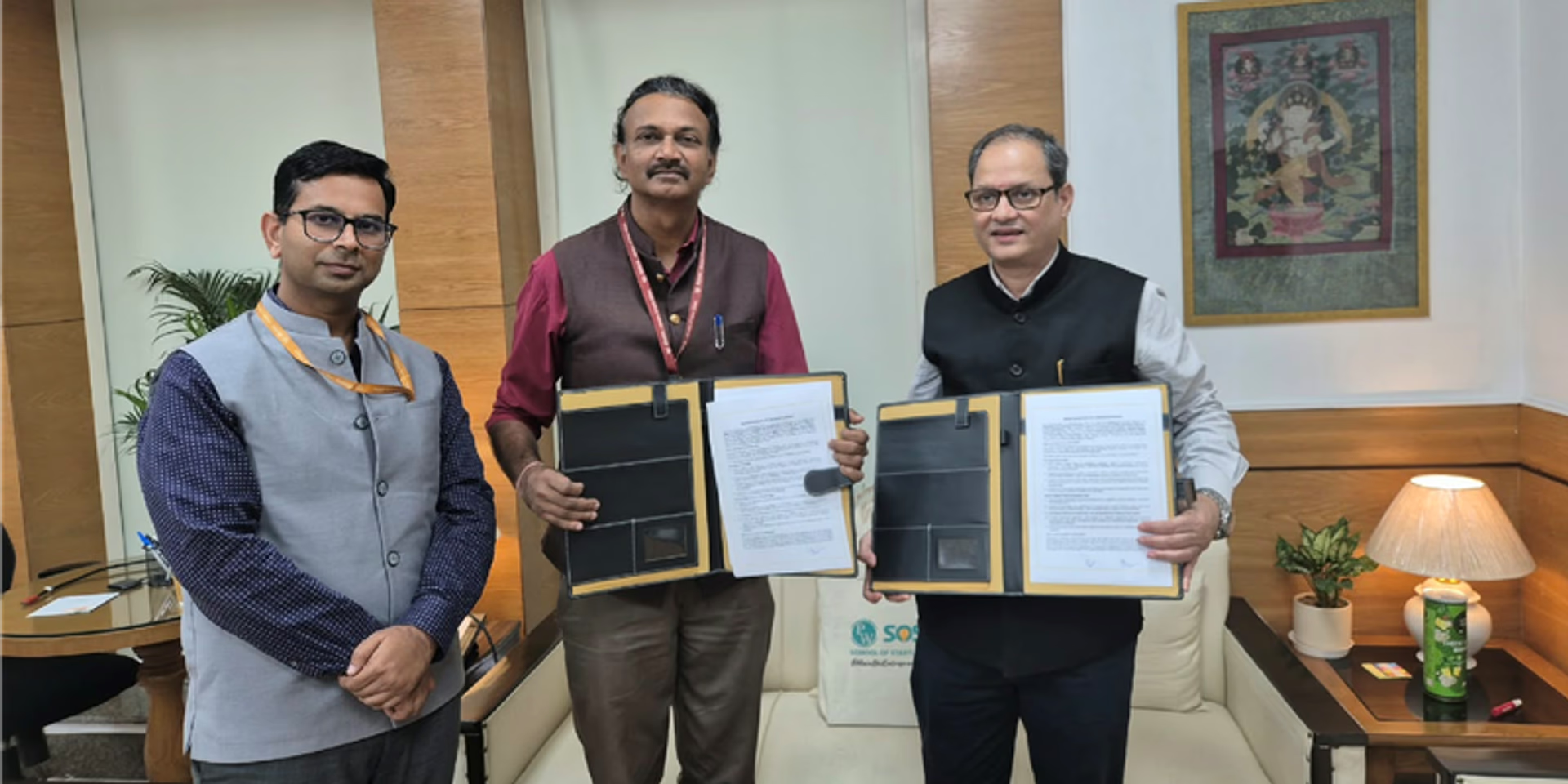
This two-year partnership aims to expand access to training, mentorship, incubation, and seed funding for entrepreneurs in small and medium-sized cities and rural areas.
PhysicsWallah School of Startups (PW SoS) has signed a two-year Memorandum of Understanding (MoU) with the Department for Promotion of Industry and Internal Trade (DPIIT) to support early-stage startups, with a particular focus on Tier-II and Tier-III cities as well as rural areas.
The collaborative initiative integrates training and mentorship with prototype development, incubation, investor connectivity, and seed funding.
“Supporting entrepreneurs beyond Tier-I cities is crucial to building a more robust startup ecosystem in India. Our partnership with the PhysicsWallah School of Startups will help grassroots-level innovators access the resources, mentorship, and infrastructure needed to transform their ideas into scalable, job-creating enterprises across India,” said Atish Kumar Singh, Joint Secretary at the Department for Promotion of Industry and Internal Trade (DPIIT).
PW SoS, an incubator recognized under the Uttar Pradesh government’s ‘StartinUP’ initiative, offers a variety of programs for founders at different stages of development. The ‘PW UDYAMI’ program combines 90 days of live online training with one year of mentorship. ‘Aarambh Immersion’ is a five-day residential program designed to assist founders with prototype development, pitch presentations, and networking. A ‘Growth-Stage CEO’ program is tailored for 200 DPIIT-recognized startups, delivered through four hybrid training cohorts. Additionally, the six-month ‘PW DeepTech Accelerator’ is designed for select startups.
The annual ‘National AI Startup Challenge’ and ‘SeedX’ initiative aim to provide opportunities for proof-of-concept development, corporate pilot projects, and seed investment. The press release also notes that the ‘StartinUP’ business incubation center in Uttar Pradesh provides both incubation support and seed funding.
Ronak Mustafa, Head of the PhysicsWallah School of Startups, stated that this initiative is intended to broaden support channels. “True empowerment means ensuring that aspiring entrepreneurs across India have access to knowledge, mentorship, and capital. Through this partnership with the DPIIT and Startup India, the PhysicsWallah School of Startups aims to empower aspiring founders.”
This collaboration comes as the startup ecosystem continues to evolve and public-sector support continues to expand. Recent data from India’s Department for Promotion of Industry and Internal Trade (DPIIT) shows that the department has recognized 250,046 startups across more than 770 districts, with 52% of these located in non-metropolitan cities.
The Startup India Seed Fund Scheme has approved 7.7567 billion rupees in funding for 4,194 startups through 244 incubators; this includes 2,356 startups based in Tier-2 and Tier-3 cities. In April of this year, the government announced the launch of “Startup India Fund 2.0,” a 10-billion-rupee initiative that distributes capital through investment funds rather than by providing direct grants to individual startups.
Policy efforts also target R&D-intensive enterprises, which typically require longer development cycles and greater capital investment. In February, the government extended the recognition period for “deep-tech” startups to 20 years and raised their annual turnover threshold to 3 billion rupees.
Private-sector initiatives are also becoming increasingly specialized. Google’s 2026 India Accelerator program has selected 20 AI-focused startups—chosen from approximately 2,500 applicants—to receive technical and commercialization support.